
Have a project? Get in touch today
Contact us


The Energy & Emissions Research Lab (EERL) at Carleton University, a leading institution in the field of methane and emissions monitoring, plays a vital role in advancing climate science through rigorous data collection and analysis. Their web-based platform required a comprehensive overhaul to reflect their leadership in this critical domain and to provide a secure, powerful, and data-driven Geographic Information System (GIS) application necessary to support their research teams and external stakeholders.


.webp)
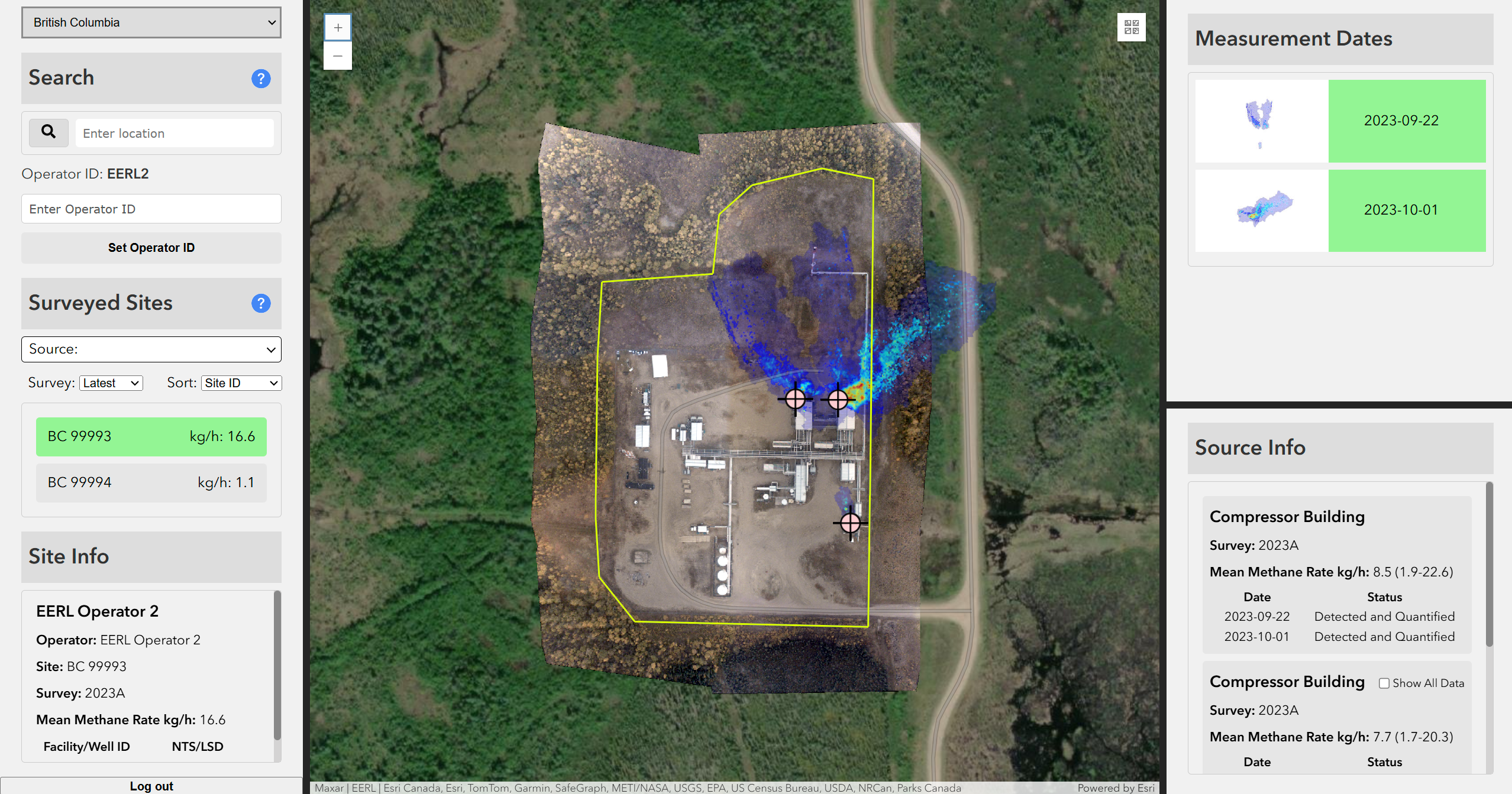
The EERL team approached Pragmatica with a clear need to transform their data visualization tool into a secure, functional, and user-level-appropriate application. They required robust enhancements to their existing web and GIS platform to support advanced environmental data analysis. A critical requirement was implementing dynamic data filtering capabilities that would allow researchers to isolate and view methane data by source, operator, and survey.
Furthermore, the application needed a comprehensive overhaul of its access control to create unique, user-level views, ensuring data security and relevance for different stakeholders. The core goal was to evolve the platform into an efficient, data-driven utility that accelerates their research into emissions monitoring.
Pragmatica treated the EERL project as a high-stakes technical enhancement, focusing on security, performance, and data integrity within the GIS application.
Discovery and Requirements Analysis
The process began with a deep dive into EERL's data structure and research workflows. We defined the exact parameters for the new filtering system, including the fields necessary to implement a source filter and a dynamic operator filter. The analysis focused on how data needed to be presented, calculated (e.g., polygon totals), and secured for various users.
Design for Data Visualization
The design phase focused on creating a clean, intuitive interface for the complex GIS application. A new UI component was designed for login to automatically and dynamically adjust the operator filter for logged-in users. The data visualization elements, including the map and info panes, were designed to update seamlessly and instantly based on the researcher’s filter selections.
Development and Custom Feature Implementation
Pragmatica developed and implemented the critical features directly into the web application:
Deployment and Knowledge Transfer
Following development, the solution was deployed. The EERL team was provided with training and documentation on managing the new data security features and on utilizing the advanced filtering capabilities to maximize their research output.
The enhanced EERL platform transformed the way the lab manages and analyzes its critical environmental data.
The project successfully positioned the EERL web portal as a cutting-edge, secure platform for advancing methane and emissions research.
